

The Seaskin Nova was my first drysuit, ordered before I knew enough to know what I didn’t know. The O’Three 90Ninety Hybrid came three years later, after cave certification and a lot of cold PNW water. Here’s what 230 dives between the two taught me.
>> Read more: For the full ordering process, total landed cost, and what to ask before you commit — see “The US Buyer’s Guide to UK Made-to-Measure Drysuits: Seaskin and O’Three”
>> Read more: whether a drysuit is worth buying before deciding which one on “Shivering is Optional: Diving in Wetsuit or Drysuit in the PNW”
Quick Specs
>> Read more: Seaskin official website
>> Read moe: O’Three official website
| Feature | Seaskin Nova | O’Three 90Ninety Hybrid |
|---|---|---|
| Material | Trilaminate | Ripstop trilaminate |
| Colors | 8 choices for body, arm, and stitching | Graphite grey with blue accent only |
| Entry | Front (back entry available at no charge) | Front |
| Telescopic torso | Additional charge | Included |
| Zipper material | Metal default; plastic available at no charge | Metal default; plastic available at no charge |
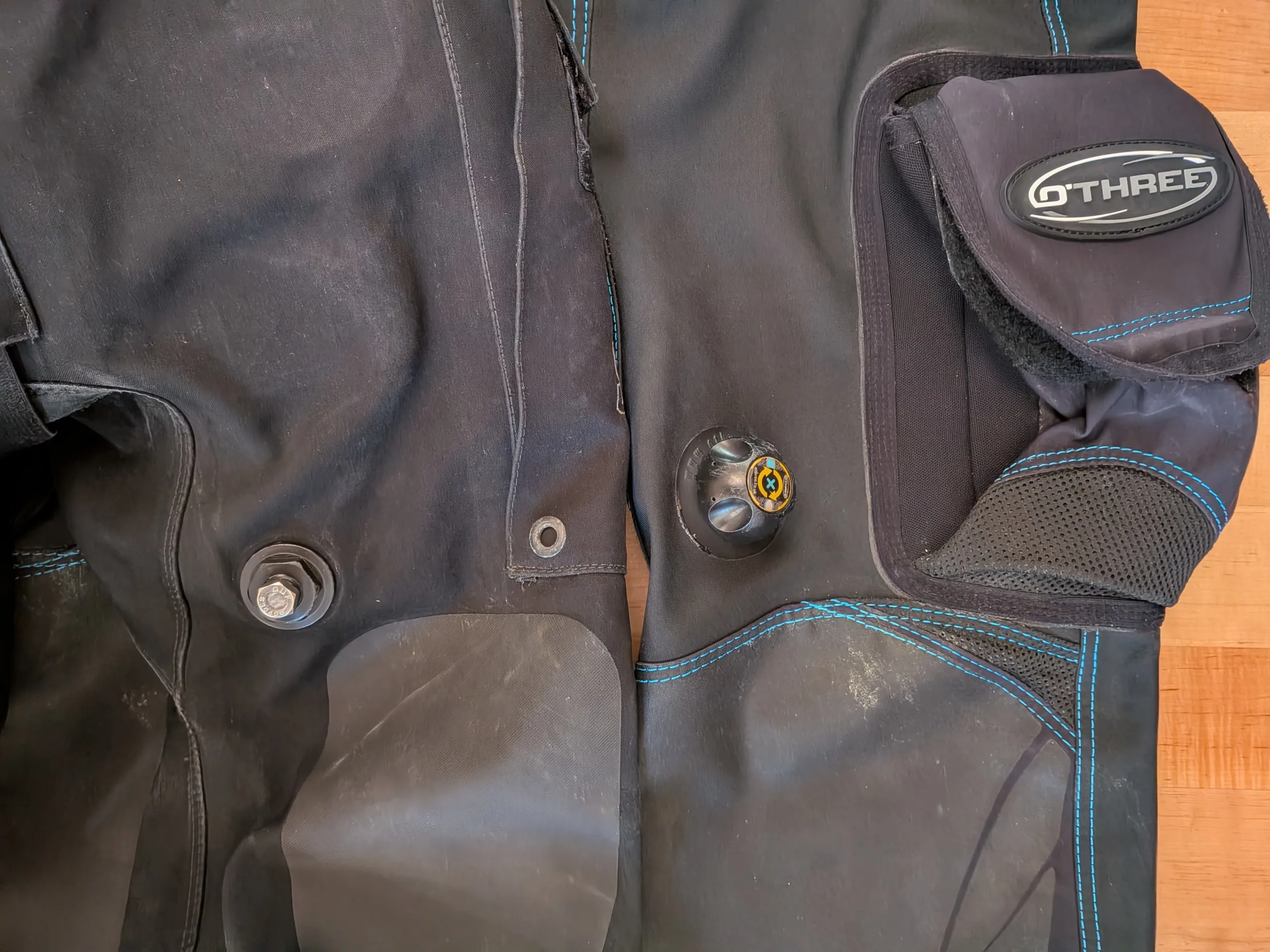
| Zipper construction | Dual diagonal (default lower right to upper left; opposite direction at no charge) | Single diagonal (lower left to upper right) |
| Neck seal | Latex standard; neoprene or Sitech quick-change for surcharge | Sitech quick-change standard |
| Wrist seal | Latex standard; neoprene, Sitech docking, Sitech oval ring, or Kubi for surcharge | Kubi standard |
| Dump valve | Apeks low-profile (choose DIR position at no charge); original auto dump for surcharge | Apeks low-profile; original auto dump available for surcharge |
| Pockets | None standard; fully customizable type, position, quantity for surcharge | 90Ninety Cargo 25 (2.5L, velcro) standard; Cargo 30 (3L) or zipped options available |
| Booties | Neoprene boots standard; neoprene socks free; upgraded options for surcharge | 3.5mm boots standard; HD boots or 2.5mm neoprene socks free |
| P-valve | Optional, additional charge | Optional, additional charge |
| Comparable spec price (excl. shipping/VAT, June 2026) | £1,185 | £2,325 |
Comparable spec: quick-change neck, thick undergarment allowance, p-valve, Kubi dry gloves, telescopic torso, 2 large pockets.
The Suits in Photos
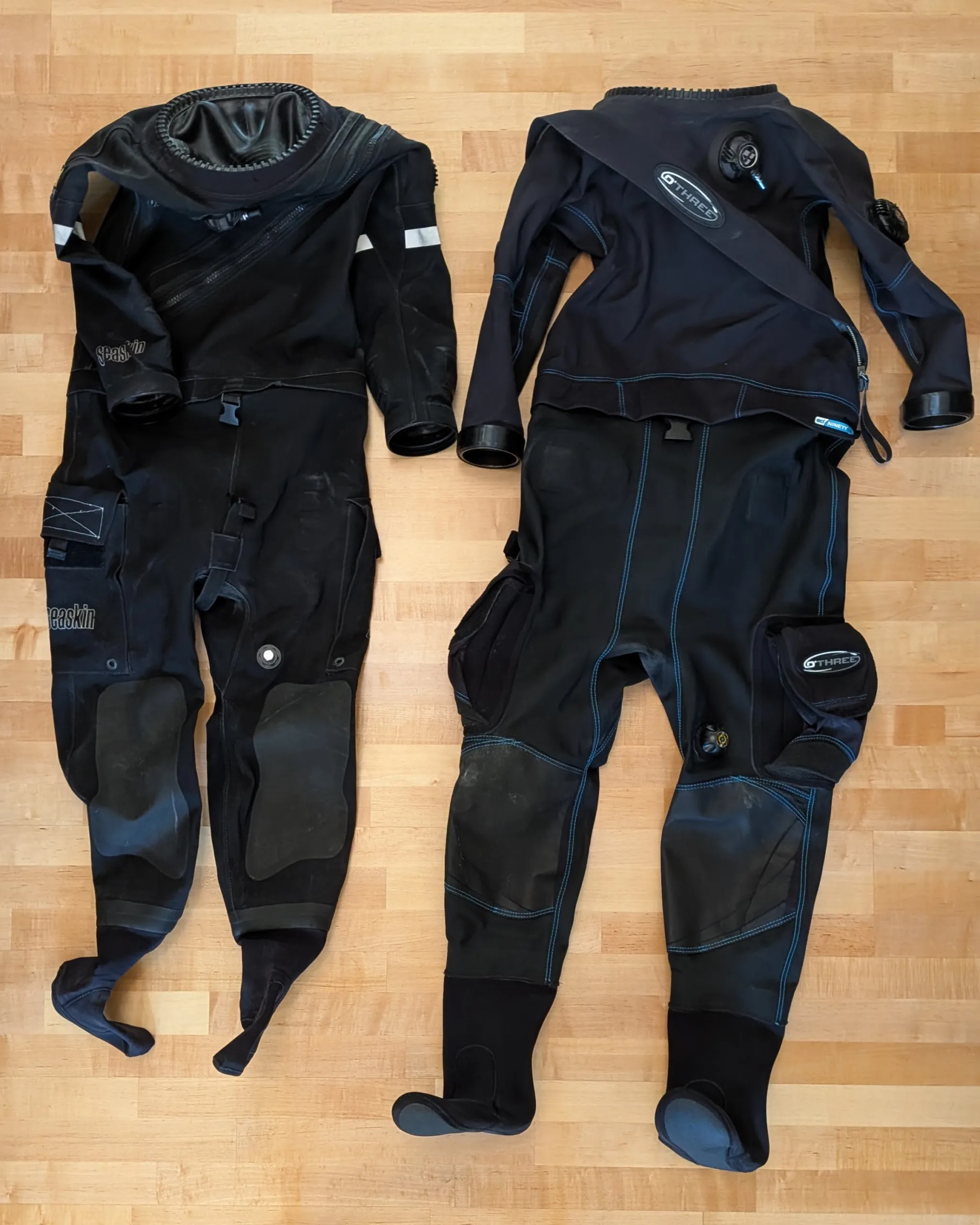
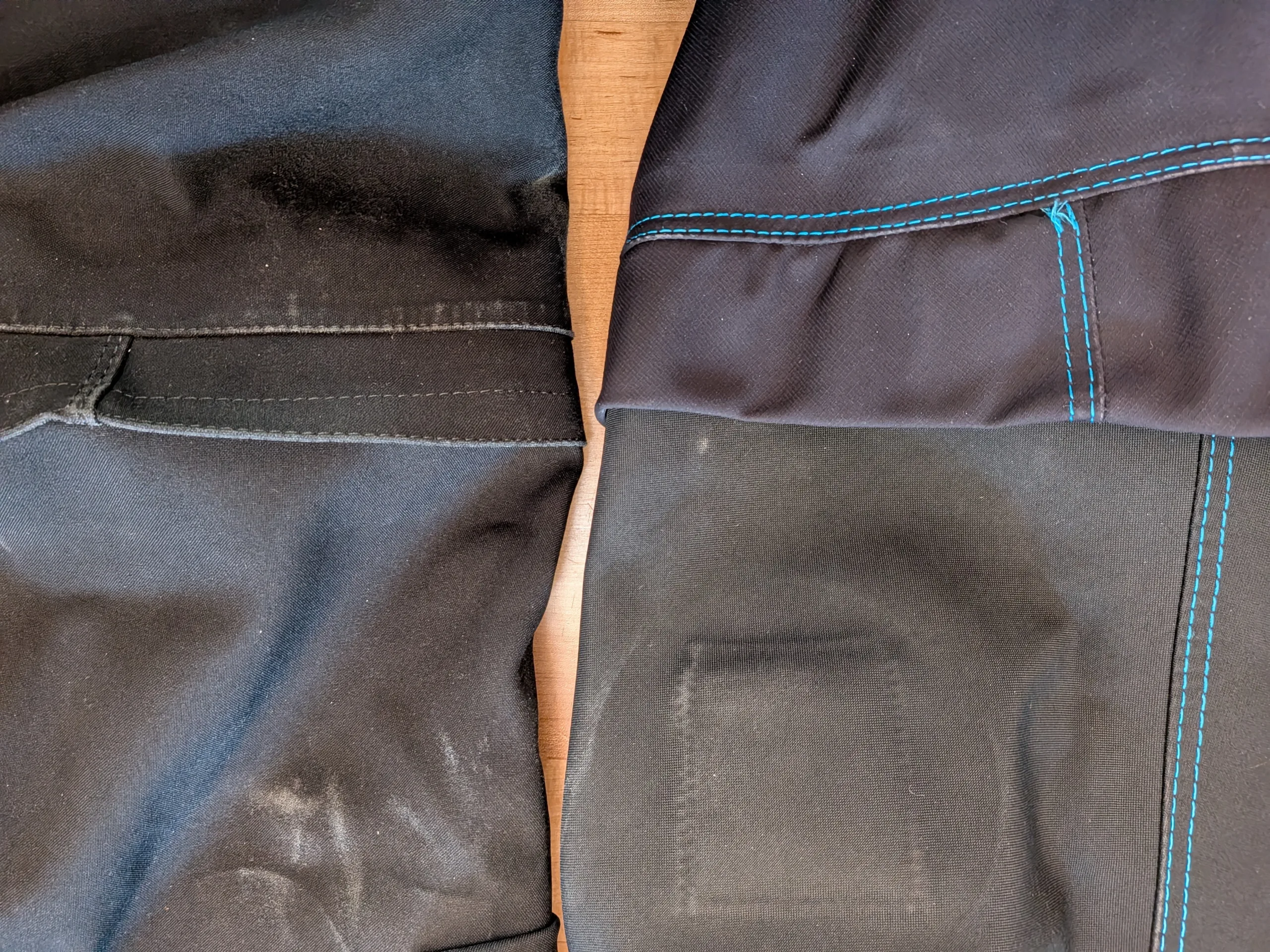
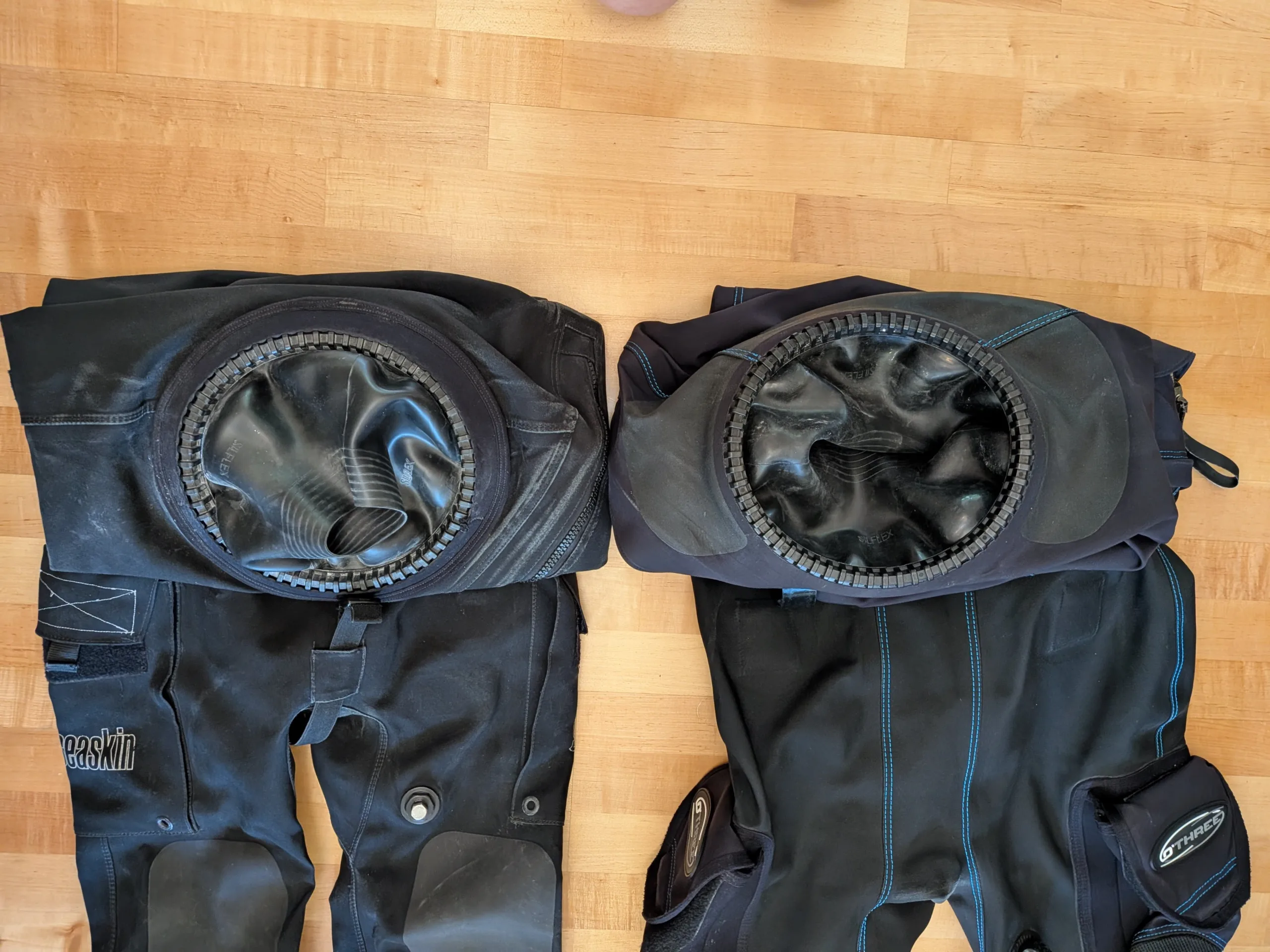
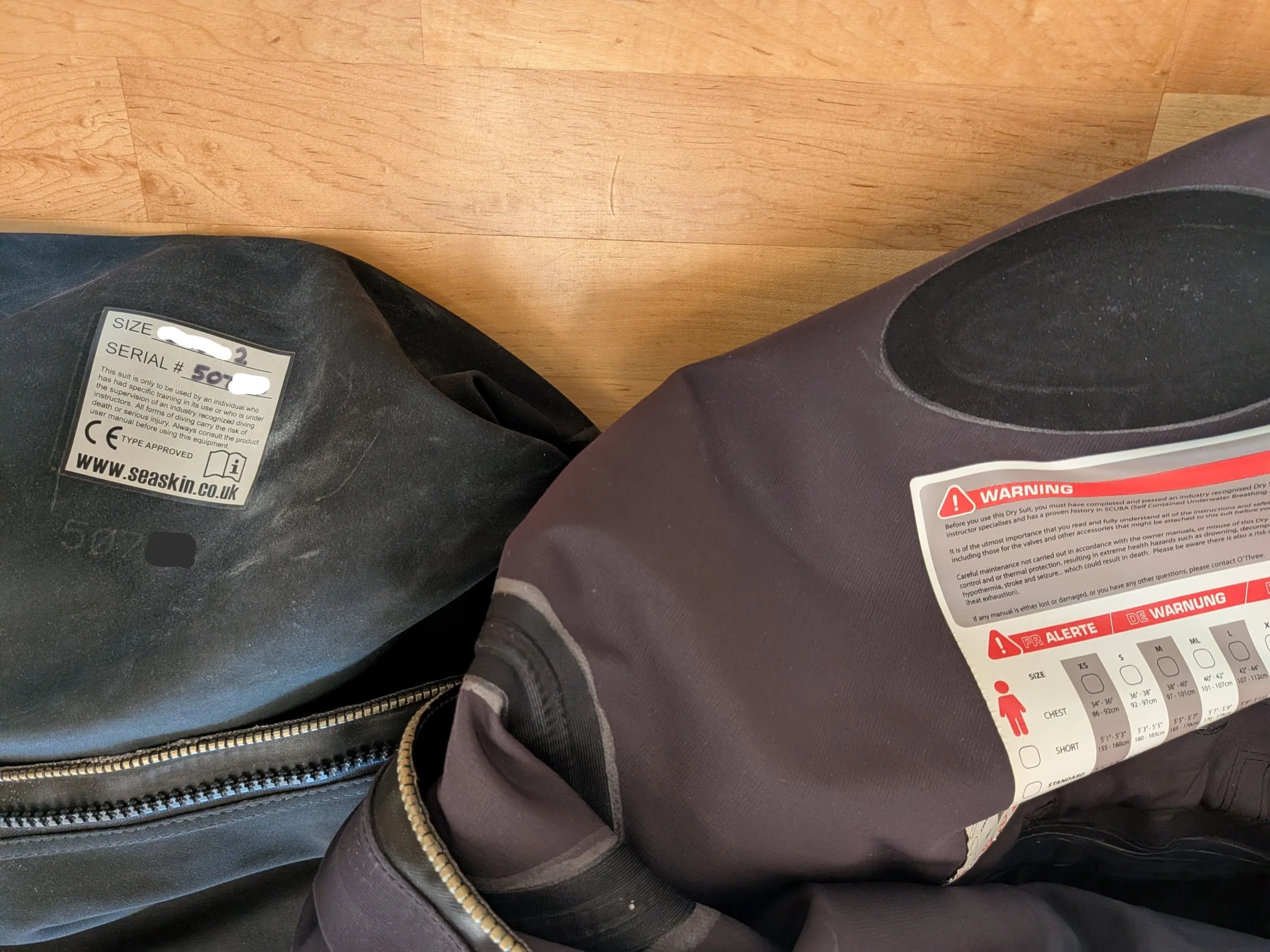
In all the pictures below, Seaskin Nova on the left vs. O’Three 90Ninety Hybrid on the right.


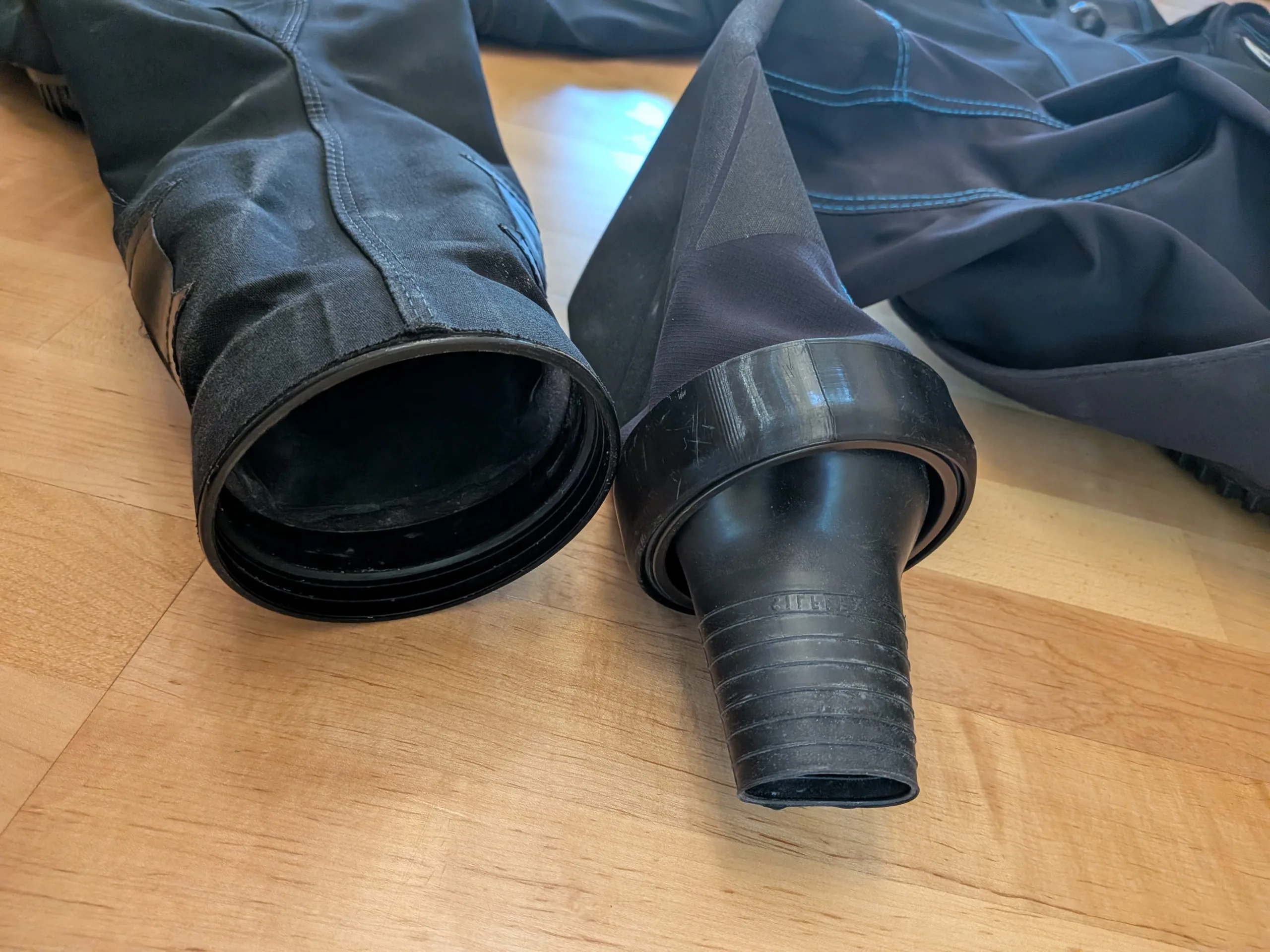
>> Read more: how the wrist seal choice at order time determines which dry glove system you can run on “Kubi vs. Rolock 90: A Dry Glove Ring System Comparison for Cold Water Divers“
Performance in the Water
Warmth and Undergarment Pairing
Water temperature in Puget Sound and Hood Canal runs around 48–54°F (9–12°C) depending on the season and site. That range demands layering — and whether your suit has room for it matters more than almost anything else.
The Seaskin works. I put 150 dives on it, including 20 in Mexican caves, and it held up. But I ordered it without adding the “allowance for extra thick undersuit” option, partly because I didn’t fully understand what that meant in practice, and partly because I was so new to drysuit diving that I didn’t know what I’d eventually need. The Seaskin fabric is also stiffer than the O’Three, which compounds the issue — there’s less give to accommodate bulkier layers.
The O’Three was sized with that lesson fully internalized. We talked explicitly about cold water layering during the consultation, sized accordingly, and the suit is noticeably more flexible. Not a close comparison on this point.
Below is a comparison with same undergarments: Fourth Element Halo 3D with T-shirts and shorts as baselayer. I wear even more during the dives and sometimes with heated vest.


Seaskin Nova (left) with cold water undergarment layers. The suit is functional — just at the limit of what it can accommodate.
 O'Three 90Ninety Hybrid (right) with the same cold water undergarment layers. Sized with layering in mind from the start.
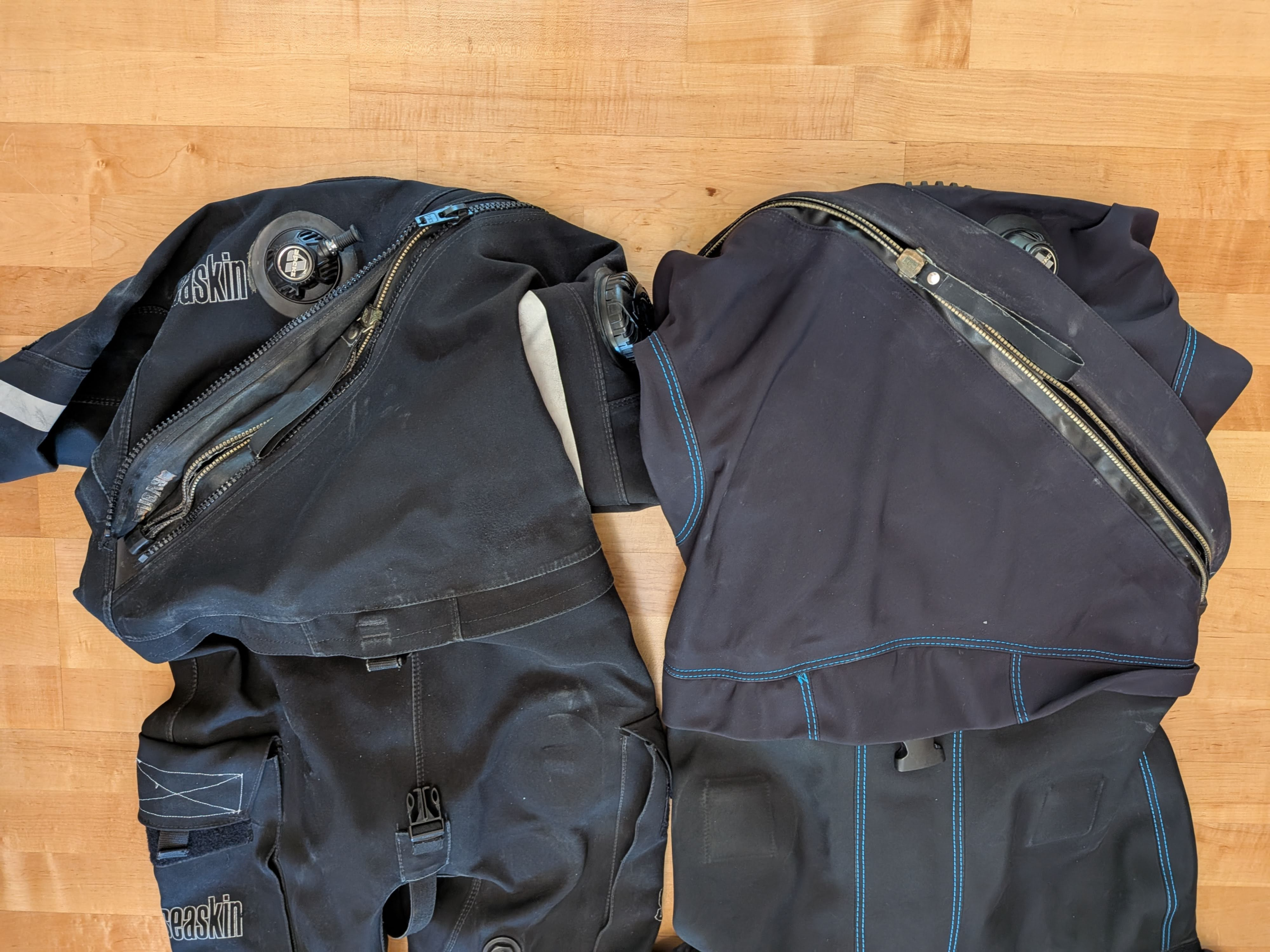
The zipper tells the story better than any description:


The Seaskin zipper with cold water layers underneath. Size for your thickest setup — not your average dive.
O'Three zipper with the same layers. Closes cleanly with lots of room to spare.
One thing worth saying: I seriously considered ordering a second Seaskin, sized correctly and with all the options I now know to choose (larger pockets, DIR valve, balanced p-valve). It would still cost less than the O’Three. We ended up going for the O’Three because we wanted to try the ripstop fabric, but the Seaskin is not a bad suit — I just undersized mine.
Mobility and Fit
Both are made-to-measure, so base sizing is comparable. A few observations specific to diving petite:
The O’Three cut is more tailored. There’s extra fabric folded into the seat area that looks odd on the floor but makes complete sense the moment you sit down on a boat. Small detail, real difference.
O’Three also flagged during consultation that the largest thigh pocket might extend to my knee given my leg length, and recommended the medium instead. That’s the kind of input a self-serve form doesn’t give you.
Two issues with my O’Three: One: the sleeves came out shorter than expected — closer to three-quarter than full length. Still functional, but it makes dry glove management slightly harder. I’m not certain whether this is a measurement error or a manufacturing variance. Second- the calf area are much bigger than my actual calves. So gas are more easily go there. I have started to use gaitor for better gas management during backmount. That said, now that I’m experimenting with sidemount using HP100s, having gas in the lower half is occasionally useful — so the gaiter comes off when I want that.
The Seaskin neoprene socks are shaped closer to my actual foot — narrower, which keeps buoyancy in the feet manageable. The O’Three neoprene socks are noticeably wider, which creates a floaty-feet situation I’ve had to manage with different pair of rock boots. I’ve been contemplating spending another $250 to swap the socks, which is not where I expected to land on a premium suit.
>> Read more: how a short backplate affects trim and fit for petite divers in the same drysuit setup on “Short Backplate Review: why this is a must for petite diver!“
Neoprene Socks vs. Integrated Boots
I chose neoprene socks on both suits, and I’d make the same call again. Integrated boots lock you into a specific sole profile and are expensive to replace when they wear out from rocky shore entries. Socks give you flexibility to find rock boots with the right buoyancy characteristics for your setup, and they’re easier to replace independently.
The tradeoff: you have to find boots that work (and you might need new fins to go with it), and you’ll spend some time dialing in the pairing. For PNW shore diving on rock and barnacle entries, that time is worth it.
PNW and Cave/Technical Diving Use
Both suits perform well in PNW conditions. The Seaskin fabric still looks new after 150 dives. The zipper has gotten a bit stiff, probably from insufficient lubrication early on, when I didn’t know better, but it hasn’t leaked. There was one small puncture that I patched with Aquaseal and never thought about again.
The O’Three is at 80 dives and looks new. The zipper is in good shape, which I attribute almost entirely to using Zip-Slip consistently. If you’re not already using Zip-Slip on your drysuit zipper, start now. A note on metal zipper maintenance: wax-based zipper lubricants make a real difference in ease of use and longevity. And if you see a loose thread on the zipper tape, trim it carefully — don’t try to burn it off.
For cave and technical diving specifically: get the pockets your thigh length allows. A 5-ft SMB fills a standard Seaskin pocket completely. Get the largest size your body will accommodate comfortably, and get them on both legs. P-valve is worth adding at order time — it’s cheaper then than as a retrofit, even though retrofitting is straightforward.
The Data Nerd Detail: Trilaminate Materials
Trilaminate means three layers: a waterproof membrane (typically butyl rubber) sandwiched between an inner and outer fabric. What varies is the outer layer — and that’s where Seaskin and O’Three diverge.
| Feature | Standard Trilaminate | Ripstop Trilaminate | Cordura Trilaminate | Kevlar-Blend Trilaminate |
|---|---|---|---|---|
| Material | Smooth nylon or polyester | Crosshatch-reinforced threads | Thick air-textured nylon 6.6 | Aramid fiber blends |
| Primary use | Day to day diving | Travel, tech, wreck diving | Heavy utility | High-impact spot reinforcement |
| Coverage | Whole suit | Whole suit | Whole suit | Targeted panels only |
| Abrasion resistance | Moderate | High | Very high | Maximum |
| Puncture resistance | Low | Moderate | High | Maximum |
| Flexibility | High | Higher | Low | Lowest |
| Weight | Lightest | Lightweight and packable | Heavy | Very heavy |
| Drying speed | Fastest | Fast | Slow | Slowest |
The Seaskin Nova uses standard trilaminate. The O’Three 90Ninety Hybrid uses ripstop trilaminate — more durable with flexibility. For PNW conditions and cave diving, ripstop is the great if budget allows.
>> Readmore: For further reading on trilaminate options:Drysuit fabric guide from Mods Drysuits
Pros and Cons
Seaskin Nova
What I loved:
- Price point — significant value for a made-to-measure trilaminate
- Dual zipper construction
- Neoprene sock shape — narrower and closer to my actual foot
- Calf shaping
- Lots of color choices
What I’d change:
- DIR dump valve position should be default, not opt-in
- Thicker undergarment allowance should be more clearly explained during ordering
- Ripstop fabric not available as an option
O’Three 90Ninety Hybrid
What I loved:
- Ripstop trilaminate — more flexible and more durable
- Ergonomic cut, including the seat panel that accommodates actual human movement
- Pocket design and sizing guidance during consultation
- Kubi dry glove system included as standard
What I’d change:
- Sleeve length came up short — verify this carefully during measurement
- Neoprene sock width — too wide for my foot, creates floaty feet
- Calf shaping: excess fabric makes gas management a bit harder, but solved by gaitors
Why I’m Solely diving the O’Three now
The honest answer: I underordered the Seaskin. The suit is fine — 150 dives of fine. But I’ve reached the limit of what I can comfortably layer underneath it for cold PNW water, and that’s a constraint that doesn’t go away with use. The suit did its job for three years while I figured out what I actually needed in a drysuit. Now I know, and the O’Three is built around those requirements.
This isn’t a verdict that the Seaskin is a bad suit. It isn’t. If I’d ordered it with the thick undergarment allowance, larger pockets, and DIR dump valve position from the start, I’d have a very capable cold water suit at a fraction of the O’Three’s price. The gap between what the Seaskin can be and what mine is comes down to choices I made in 2022 without enough experience.
Who Should Consider Each Suit
Seaskin is the right starting point if you’re new to drysuit diving, working with a tighter budget, and willing to put in the research time. Read the Scubaboard thread before you order. Use the ordering lessons from Part 1. Get the options right the first time.
O’Three is the right choice if you have the budget, want a more supported buying experience, and want a suit that arrives well-equipped with premium materials from the start.
MTM from the UK may not be right if you want to try on before committing, want local support after purchase, or need everything to be perfect on arrival. Made-to-measure should be closer to right than off-the-shelf — it’s not guaranteed perfect.
Frequently Asked Questions
Is the Seaskin or O’Three better for cold water diving?
Both are adequate drysuits for cold water diving. What matters more than the brand is whether you sized correctly for your undergarment setup. Get dry gloves. Leave room for layers. Those two things matter more than which suit you choose. Err on the bigger side if unsure.
Is a made-to-measure drysuit worth it for a petite diver?
Yes. Off-the-shelf sizing rarely works well at the petite end of the range, and MTM closes that gap without necessarily costing more. Seaskin in particular is competitive with or cheaper than many off-the-shelf options from major brands.
Can you get a good fit from a UK MTM drysuit without going in person?
Yes, with the caveat that “good fit” and “perfect fit” aren’t the same thing. Both brands provide measurement guidance remotely. O’Three offers video call fitting. Size with your intended undergarments for coldest possible water in mind, go slightly larger when in doubt, and understand that minor variances can happen.
Which suit is better for technical or cave diving?
Both are adequate for technical and cave diving. Prioritize getting pockets that fit your thigh length and add a p-valve at order time. Both the Seaskin and O’Three support these configurations.

About Pan — Full Cave and Advanced Recreational Trimix diver based in the Pacific Northwest. I started diving without knowing how to swim; now I drive three hours each way to dive in Puget Sound/Hood Canal. Two Ocean Notes documents the technical progression, gear decisions, and travel planning behind this dive life — from a petite engineer’s perspective, without the fluff. → Read my full story
FOLLOW ME
For My Latest Dive Stories & Journey
Tags:
Editorial disclaimer
Please be aware that scuba diving is an inherently risky activity, even with certification and experience. The content on this blog reflects my personal opinions and experiences and should not be considered instructional. Always prioritize safety, seek guidance and certification from qualified diving professionals, and carefully consider the risks involved in any dives.
Discover more from Two Ocean Notes
Subscribe to get the latest posts sent to your email.

