
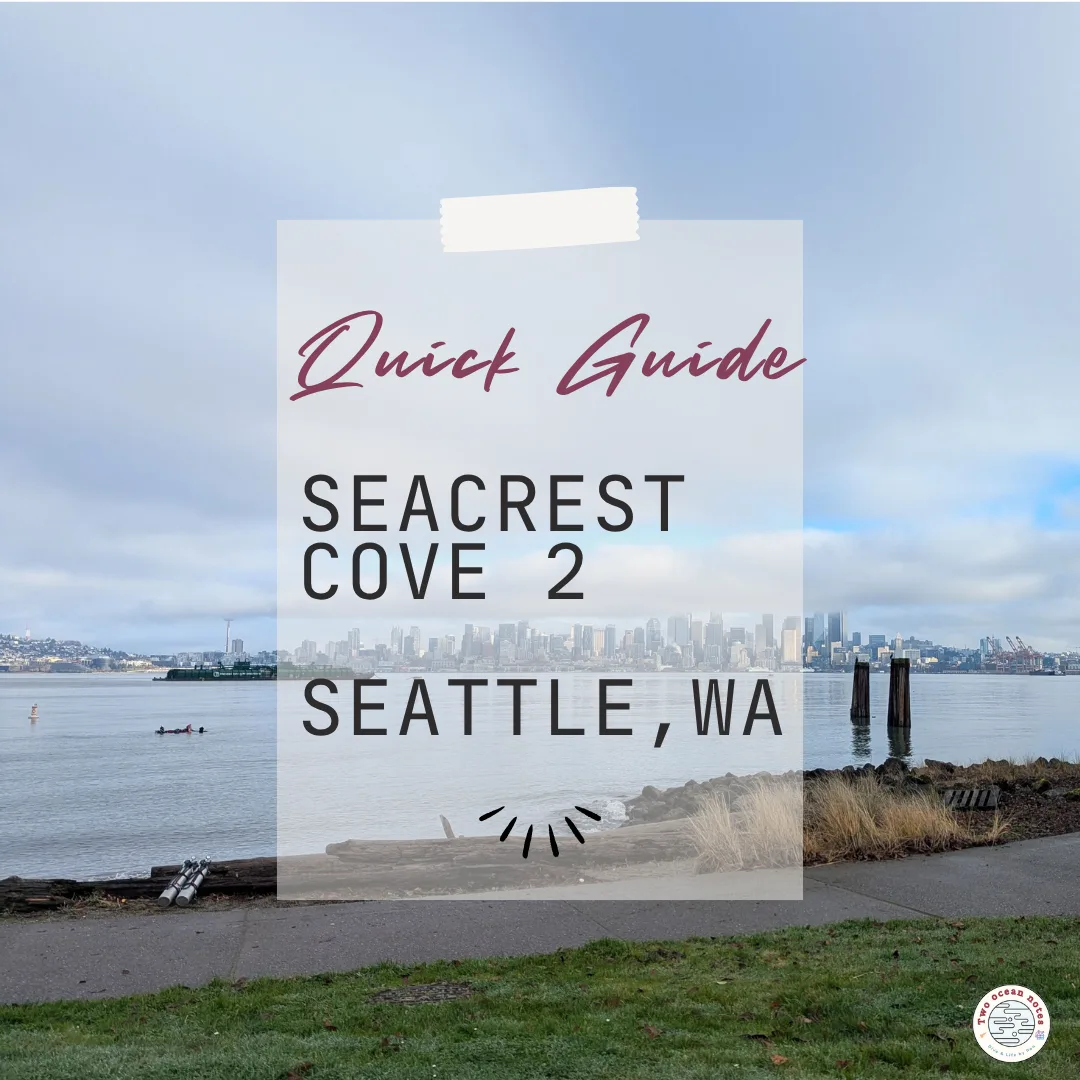
Seacrest Cove 2 is one of Seattle’s most accessible shore dives — and one of its busiest. Expect company on any decent-weather weekend. The Seattle skyline view from the surface is a bonus


Address / Google Map
Address: 1660 Harbor Ave SW, Seattle, WA 98116 (Search “Seacrest Park Cove 2” on Google Maps).
Entry
If the videos from Instagram didn’t work, head to youtube https://youtu.be/GtdVz7UCLPo
Dive Site Information
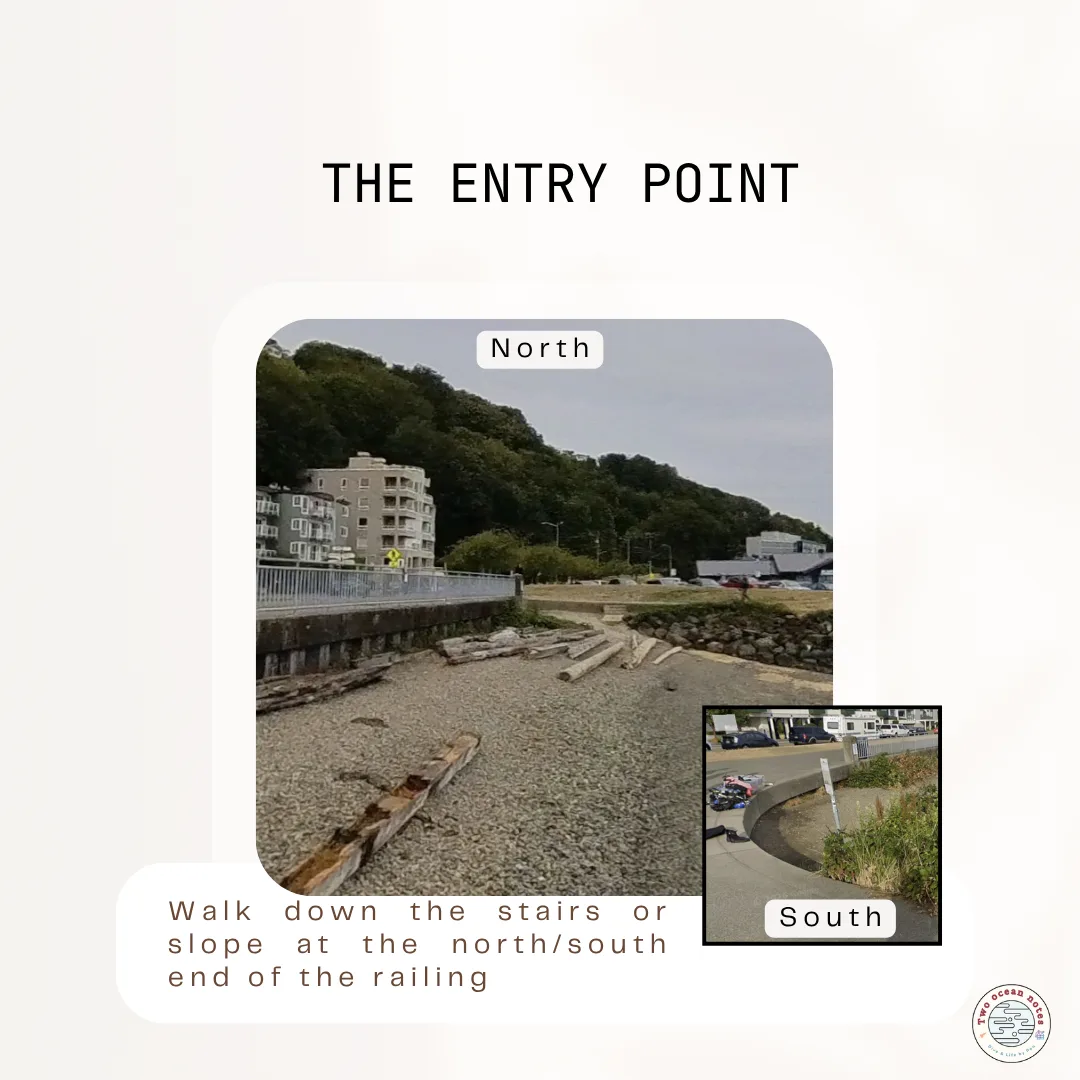
Access: Access the beach from either side (by parking lot or end of railing near the picnic table).
Dive Profile: Max depth is around 100–110 ft, with points of interest distributed throughout the water column. I typically run 50–60 ft, though I’ll go shallower for skill work or drop deeper when the mood strikes.
Bottom Composition: Sands
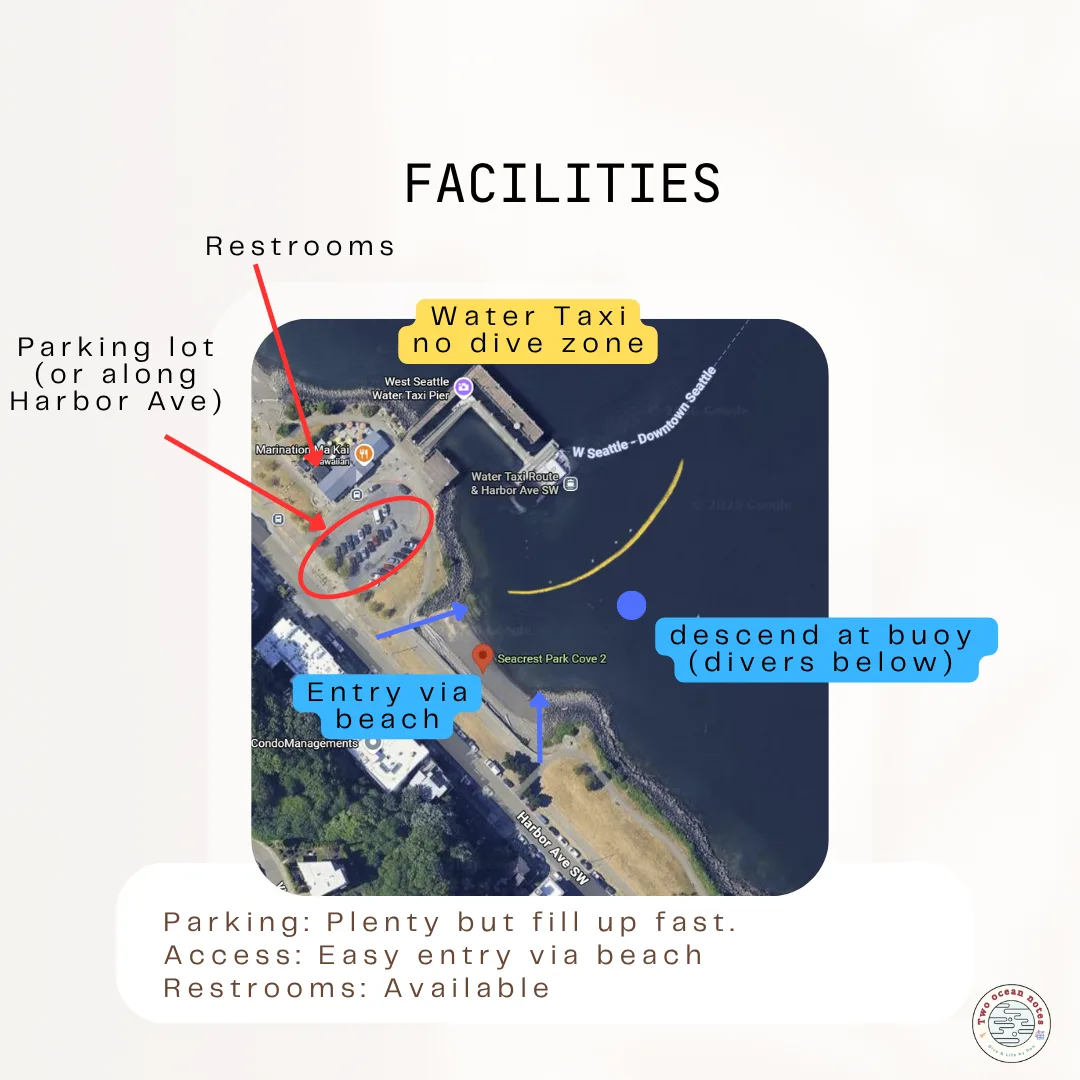
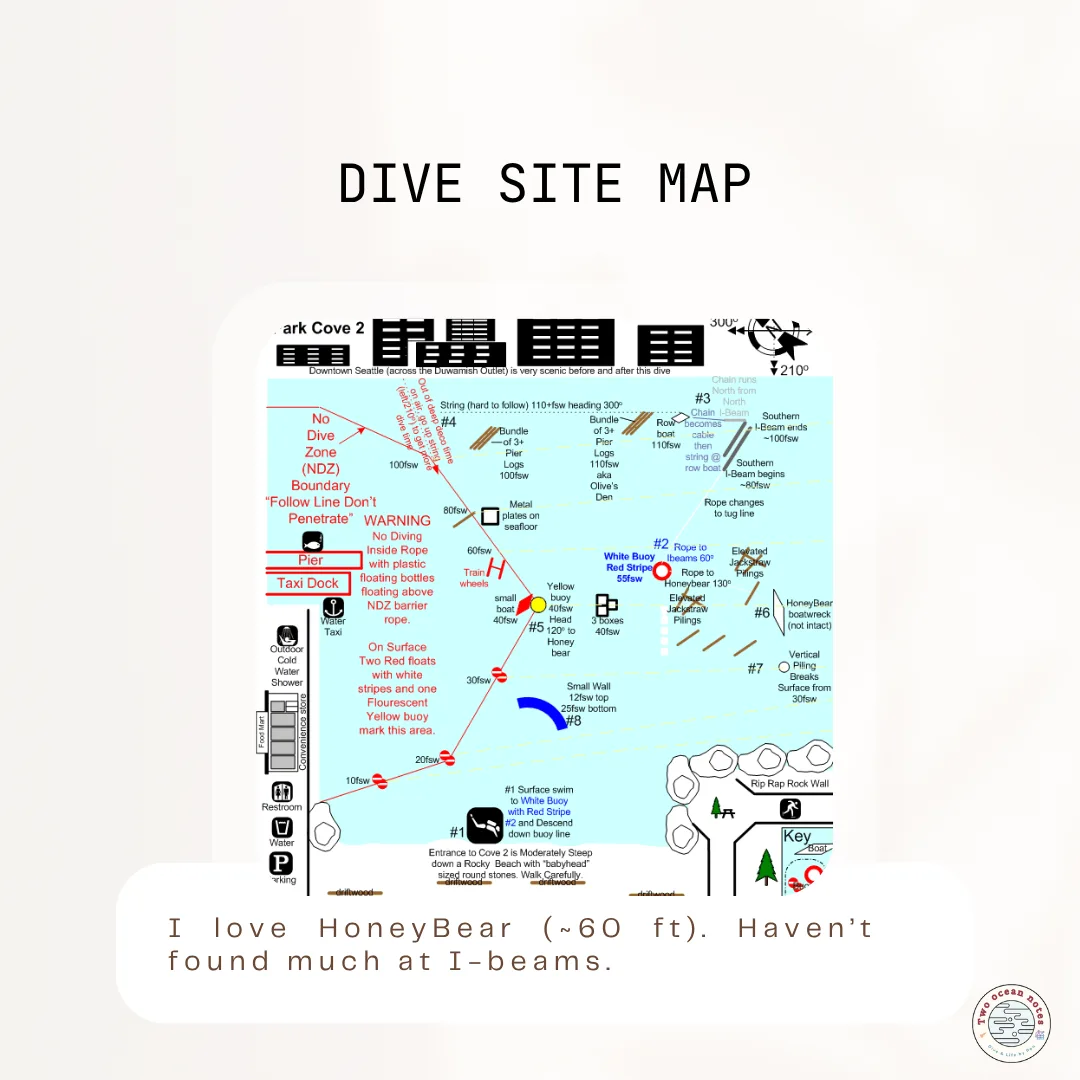
Hazards: Water Taxi dock is right beside it. They are clearly audible and well marked. Buoys mark the No Dive Zone and you will see the buoy line down to the bottom, and the ropes outline the no dive zone as well.
This is a popular training site. Expect the occasional student diver descending into your space, and plan for reduced viz in the shallows when classes are running
Current: Typically not a lot of current.
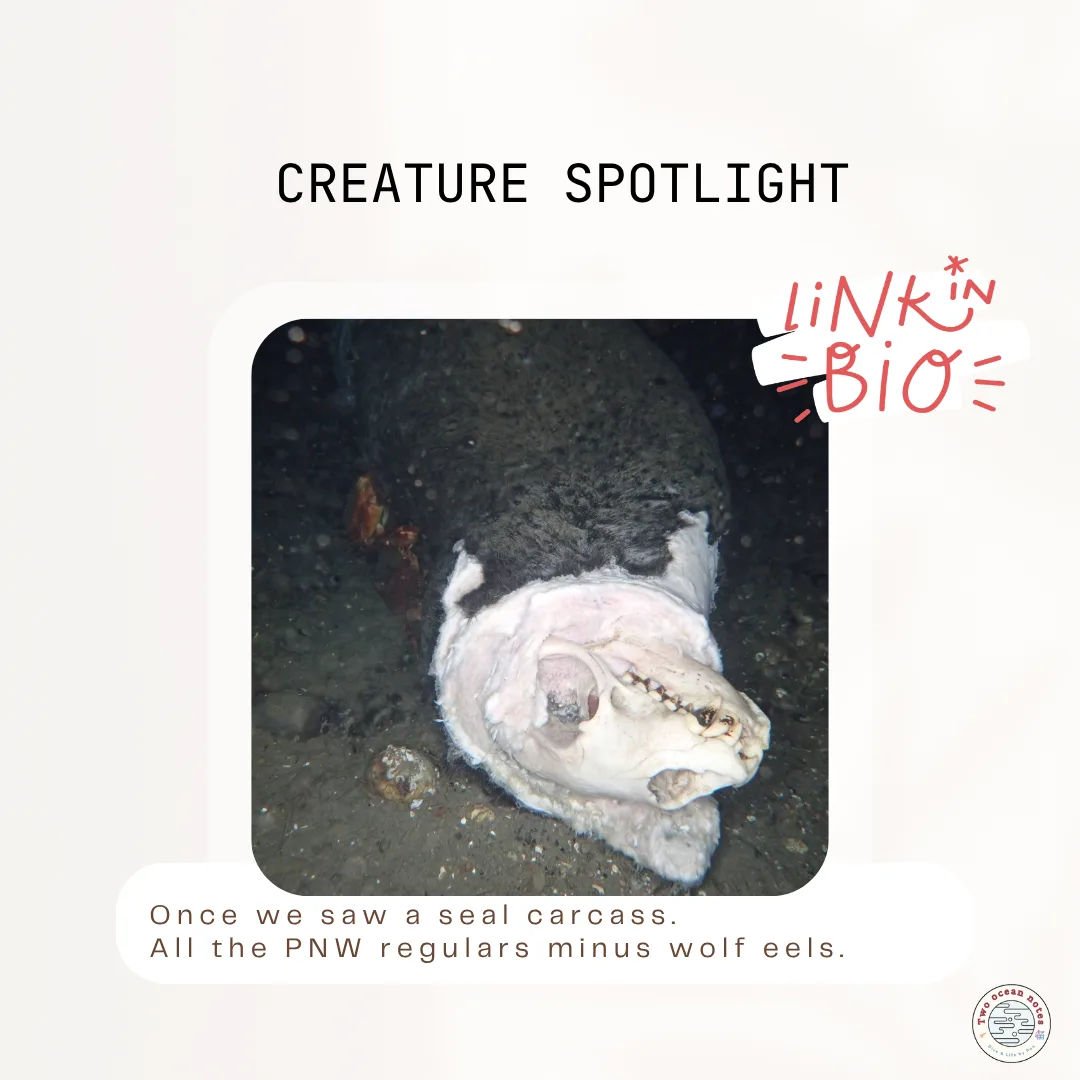
Things to see: All the PNW regulars — rockfish, greenlings, sculpins, nudibranchs, red octopus. I have not seen wolf eels here yet.
Plan a safe, comfortable dive with planyourdive.com
Dive Site Map
This is the most detailed version I found on Seattle Dive Tours. However, I found the figure 8 route suggestions confusing, so we typically either target the Honey Bear or the I-beam and just do a out-and-back dive.

Food for thought for planning
Levels: All levels. Beginner friendly. Popular training site.
Facilities: Restrooms, picnic tables, rinse shower (closed in winter). The Marination Ma Kai is at the same parking lot.
Parking: Plenty. Park either in the parking lot or along the road. However, this is a very popular spot and parking can fill up fast.
Hours: 4 a.m. – 11:30 p.m
Other Activities: Water taxi.
Reference Materials
Visibility report: https://pnwdiving.com/seacrest-cove-2
Tide & current: https://www.planyourdive.com/sites/alki-cove-2
Dive site info: Seattle Dive Tours, Eight Diving
Frequently Asked Questions
Is Seacrest Cove 2 good for beginner divers?
Yes — it’s one of the most beginner-friendly shore dives in Seattle. Easy beach entry, no significant current, and a sandy bottom make it a popular training site. That said, visibility can degrade quickly when classes are running and the sand gets kicked up. If you’re newer, aim for a weekday or early morning to avoid the crowds.
Is there parking at Seacrest Cove 2?
Yes, there’s a parking lot at Seacrest Park plus street parking along Harbor Ave SW. It fills up fast on sunny weekends — arrive early or accept some walking distance.
Are there wolf eels at Seacrest Cove 2?
Not typically. If wolf eels are on your list, you’ll need to head to Hood Canal or other sites with rocky reef structure.
What is the Honey Bear at Seacrest Cove 2?
The Honey Bear is an artificial reef structure (a sunken vessel) that’s one of the main navigation targets at Cove 2. It sits deeper in the dive site and is a popular goal for divers working their way out from the beach. The I-beam is another common landmark. Both work well for an out-and-back dive.

About Pan — Full Cave and Advanced Recreational Trimix diver based in the Pacific Northwest. I started diving without knowing how to swim; now I drive three hours each way to dive in Puget Sound/Hood Canal. Two Ocean Notes documents the technical progression, gear decisions, and travel planning behind this dive life — from a petite engineer’s perspective, without the fluff. → Read my full story
FOLLOW ME
For My Latest Dive Stories & Journey
Tags:
Editorial disclaimer
Please be aware that scuba diving is an inherently risky activity, even with certification and experience. The content on this blog reflects my personal opinions and experiences and should not be considered instructional. Always prioritize safety, seek guidance and certification from qualified diving professionals, and carefully consider the risks involved in any dives.
Discover more from Two Ocean Notes
Subscribe to get the latest posts sent to your email.
